What Changed Since CBT

Vehicle balance, ability tuning, handling adjustments, and scoring: everything that changed since the Closed Beta.

For the exhaustive changelog with the full numerical breakdown, see the changelog on the customer support portal.

Since the Closed Beta Test ended, we’ve continued refining vehicle balance, handling, ability tuning, and scoring. Several vehicles and abilities received targeted changes in response to CBT performance and your feedback, alongside broader passes on aircraft and drone survivability.

This article is the editorial summary. The linked changelog above carries the exact before/after values for every change covered here.

Vehicle changes

HSTV-L

The HSTV-L was the single most-discussed vehicle of CBT. Many of you loved the tank’s fast-paced, aggressive playstyle and the way its kit revolves around drifting and flanking, but it was also consistently flagged as overtuned, which made it a key focus of this balance pass.

We targeted three problems:

  • Burst damage was too reliable. The HSTV-L could destroy opposing medium vehicles too consistently without needing a reload, especially when landing repeated critical hits at close-to-medium range. Burst potential was reduced and gun dispersion was increased to pull back reliability during sustained fire.
  • Turret armor. Frontal turret armor was adjusted, so certain ammunition types now deal more consistent damage against the HSTV-L.
  • Handling. The drift itself was fine. It’s a core part of the vehicle’s identity and the most-praised mechanic from CBT. The real issue was that the vehicle could be difficult to control. Mobility tuning improves overall handling consistency, with additional reverse steering tuning so the HSTV-L’s unique movement profile is preserved.

Net effect: still aggressive, still drift-focused, but less oppressive in mid-range exchanges and more controllable in the hands of a skilled player.
M551A1

Based on your feedback, the M551A1 felt less agile than the HSTV-L. We’ve improved mobility and handling so the vehicle feels more responsive, with handbrake behavior now more closely matching the HSTV-L’s controller drift handling.

The M551A1’s abilities also received attention:

  • APS was strengthened. It lasts longer, has a larger HP pool, and the supporting modules (TRA-118 and MAR-263) provide bigger HP bonuses.
  • Canister Volley had its energy cost reduced and its cooldown shortened, making it a more frequent tool in combat.

Object 287

The Object 287’s reload time was shortened to improve the responsiveness and pacing of its burst-fire gameplay during sustained engagements.

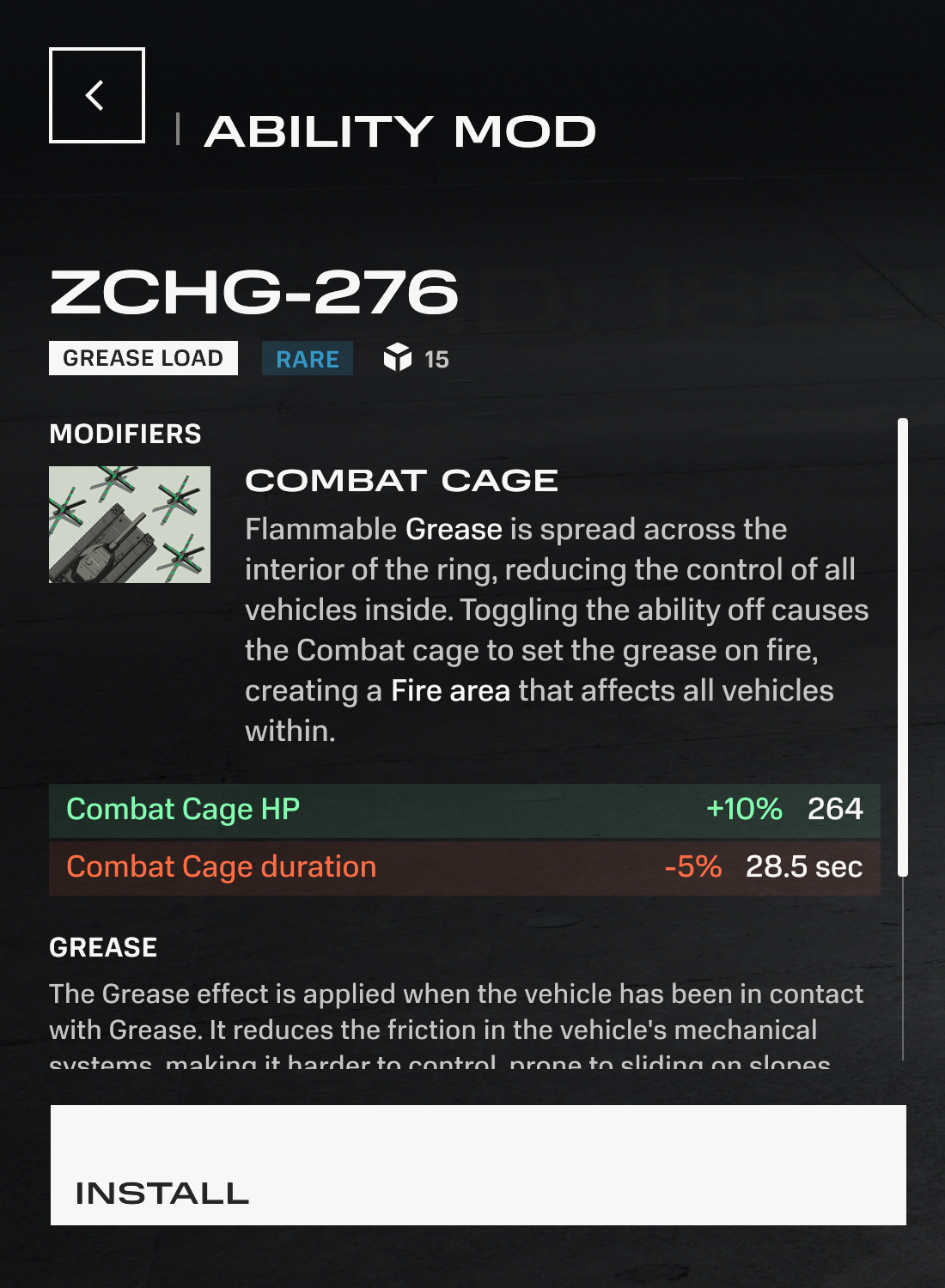
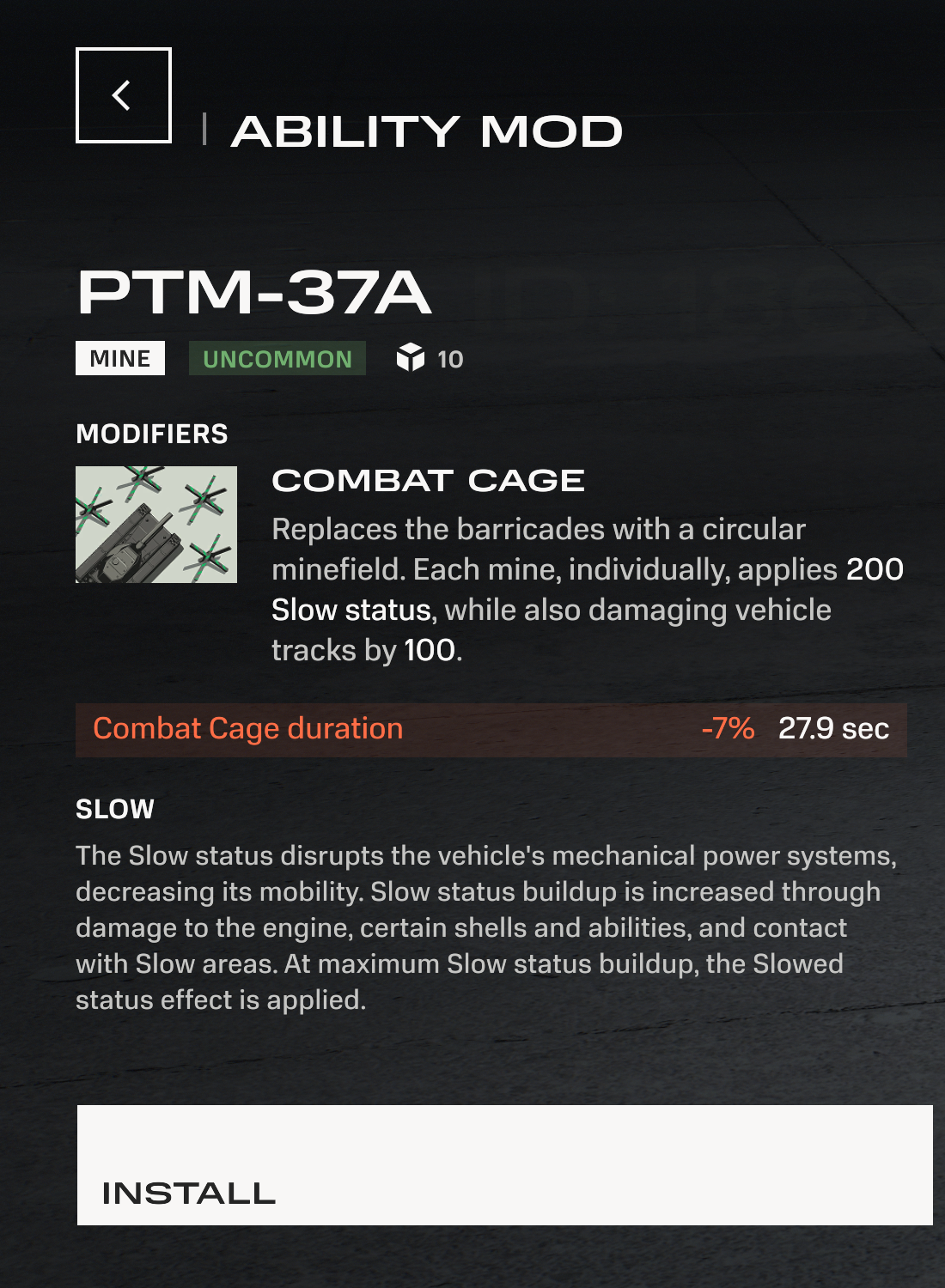
Two of its modules, ZCHG-276 and PTM-37A, also received attention. ZCHG-276 had its grease deployment slightly delayed. The previous near-instantaneous deployment created inconsistency at the start of an engagement. PTM-37A had its mine duration extended so the Object 287 can maintain area denial pressure for longer.

ZCHG-276 module for Object 287. A grease deployment module; deployment timing was slightly delayed.
PTM-37A module for Object 287. A mine deployment module; mine duration was extended.

FV4030 X

The FV4030 X received handling and survivability tuning to better support its intended HE-focused role against fast-moving vehicles.

  • Turret rotation was increased to improve performance against fast-moving targets.
  • Gun armor values were retuned after previous values created more weak spots than intended.
  • Gun dispersion was retuned to reinforce the FV4030 X’s close-to-mid-range identity. Base dispersion improved and dispersion while moving was reduced significantly, so the vehicle is more reliable in close and mid-range engagements. At the same time, maximum dispersion and projectile gravity were raised, which reduces its effectiveness at long range. The intent is to keep the FV4030 X strong where its HE role is most useful and pull back its overly effective long-range playstyle.

M60A2

The M60A2 had trouble keeping pressure on highly mobile vehicles. Turret rotation speed was increased so the vehicle can better land its HE shots and better track fast targets.

AMX 10 RC

The AMX 10 RC’s UAV Drone received durability, speed, and active uptime reductions, as part of a broader pass on aircraft and drone survivability (see also Reaper and Fuzzer below). The drone’s relentless scouting and pressure window is now shorter, with clearer counterplay opportunities for the opposing team.

Marder 1A3

The Marder 1A3 received a small survivability pass. Its HP was increased so the vehicle holds up better in exchanges.

The Smart Mines’ ammo crit modifier was reduced, since the previous values could produce overly punishing burst outcomes against enemy vehicles.

ALVT

ALVT’s Dirty Substance had its energy cost reduced, so you can activate the ability more frequently and maintain better combat flow.

Agent ultimates

Three agent ultimates received changes since CBT. Reaper’s and Fuzzer’s ultimates, both of which call in aircraft, were part of a broader pass to make aircraft and drone abilities more contestable while active. Coordinated counterfire from your team should now meaningfully bring them down within their active window. Twister’s ultimate was tuned to pull back its area denial pressure.

Twister: Lights Out

Twister’s ultimate was pulled back. The Slow effect, the Pulse Bomb’s HP, and the radius were all reduced, making the ability less oppressive during an engagement while keeping it a strong area denial tool.

Reaper: Napalm in the Morning

The F-4 Phantom’s HP was reduced for both its scouting and bombing variants. Coordinated counterfire is now a real option against the aircraft during its active window.

Fuzzer: Strike Laser

The aircraft’s HP was reduced. The plane was previously durable enough that even concentrated fire from multiple players struggled to take it down.

Vehicle handling

Several vehicles, including the ALVT, HSTV-L, XM1V, and AMX 10 RC, received additional driving and steering tuning. Less throttle is maintained while steering both forward and in reverse, producing more natural speed loss during turns and improved overall consistency.

The HSTV-L received further tuning on its reverse steering behavior, which had inconsistencies during CBT that broke the vehicle’s otherwise distinctive movement profile.

Scoring

Several scoring values were rebalanced to better recognize active combat participation and objective play, and to pull back on actions that were generating far more score than they should have.

Role Points

  • Capture and Uncapture scoring was rebalanced. Values in Control were increased; values in Conquest and Hardpoint were reduced.
  • Kill Confirmed (picking up an enemy token) and Kill Denied (picking up an allied token) values were increased.
  • Raw kill points were reduced. Kill participation now matters more than the killing blow.
  • Ranged damage and critical damage scoring was added.

Bug fixes

We fixed a range of issues since CBT. The most impactful was a bug with shields, where shells were interacting with shield effects in a way that made vehicles take dramatically less armor damage than intended. In some cases, the damage dealt was much lower than it should have been. With this fix, armor and ammunition interactions should now behave consistently across all vehicles.

For the full list of bug fixes and the exact value changes for every adjustment covered above, see the changelog on the customer support portal.